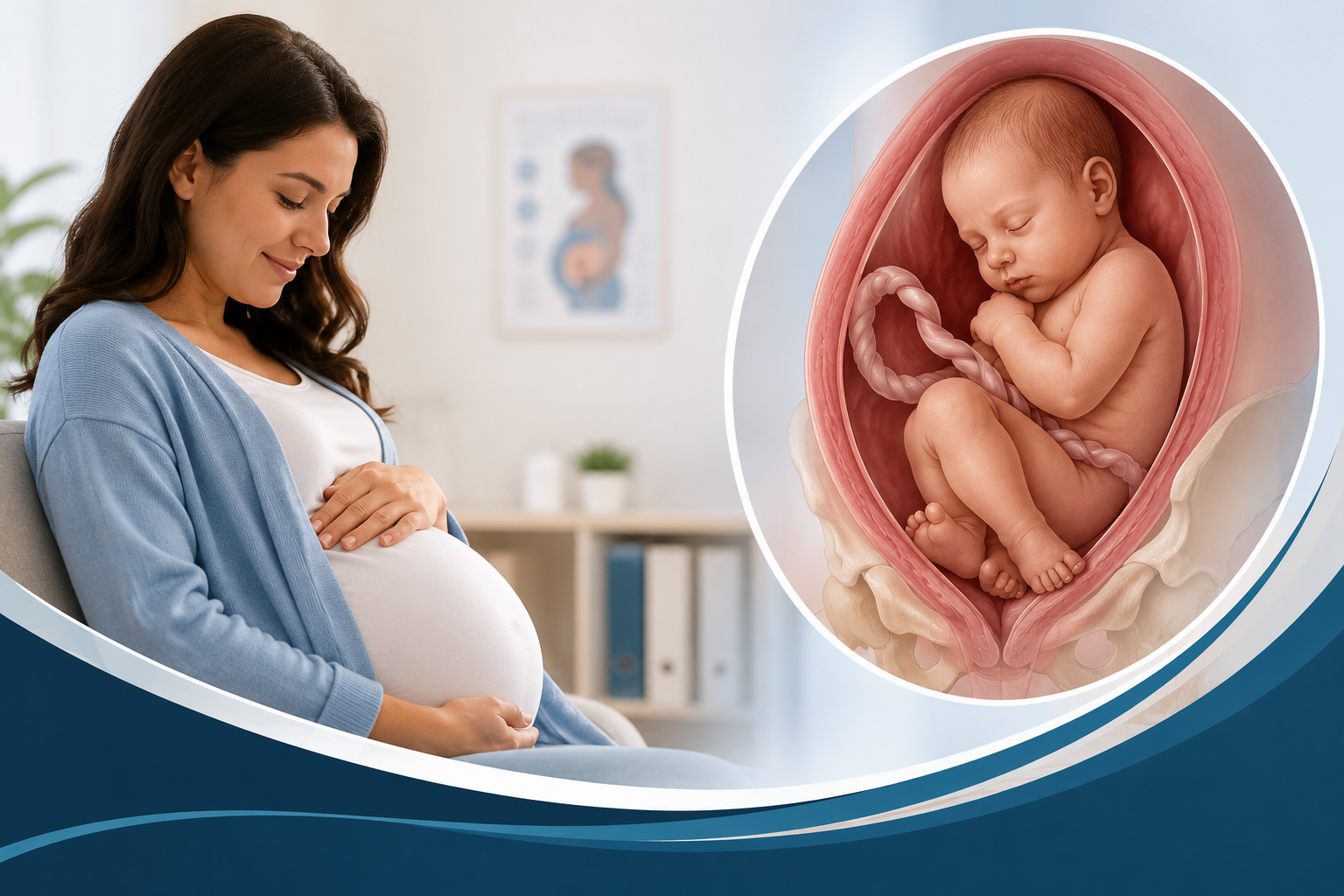
During a healthy pregnancy, most babies naturally move into a head-down position before birth. However, in some pregnancies, the baby remains with the buttocks, feet, or both positioned to come out first. This is known as a breech presentation. While many breech babies can still be delivered safely with proper medical care, the position may increase certain risks for both the mother and baby. This guide explains Breech Presentation: Causes, Risks, Symptoms & Treatment, helping expectant parents understand the condition and available management options.
What Is a Breech Presentation?
A breech presentation occurs when a baby is positioned in the uterus with the buttocks or feet closest to the birth canal instead of the head. Most babies turn head-down by around 36–37 weeks of pregnancy, but approximately 3–4% of full-term pregnancies remain breech.
Healthcare providers usually identify a breech presentation during a routine prenatal examination or ultrasound.
Types of Breech Presentation
There are several types of breech presentation.
Frank Breech
This is the most common type. The baby’s buttocks point downward while both legs are extended upward toward the head.
Complete Breech
The baby’s buttocks are positioned downward with both knees bent, giving the appearance of sitting cross-legged.
Footling Breech
One or both feet are positioned below the buttocks and may enter the birth canal first.
Kneeling Breech
The baby is positioned with one or both knees closest to the birth canal. This type is relatively uncommon.
Causes of Breech Presentation
In many cases, the exact cause is unknown. However, several factors may increase the likelihood of a breech baby.
Common causes and risk factors include:
- Premature pregnancy
- Multiple pregnancy (twins or triplets)
- Too much amniotic fluid (polyhydramnios)
- Too little amniotic fluid (oligohydramnios)
- Uterine abnormalities
- Placenta previa
- Fibroids
- Previous breech pregnancy
- Certain fetal conditions that affect movement
Having one or more of these factors does not necessarily mean a baby will remain breech.
Symptoms of Breech Presentation
Most pregnant women do not notice obvious symptoms. However, some signs may include:
- Feeling the baby’s head under the ribs.
- Strong kicks in the lower abdomen.
- A healthcare provider detecting the baby’s position during a physical examination.
- Ultrasound confirmation of the baby’s position.
Because symptoms alone cannot reliably diagnose a breech presentation, imaging is often used for confirmation.
Diagnosis
Doctors may diagnose a breech presentation using:
- Abdominal examination (Leopold’s maneuvers)
- Pelvic examination in selected cases
- Ultrasound scan
- Fetal heart rate monitoring when needed
Ultrasound is considered the most accurate method for confirming the baby’s position.
Risks and Complications
A breech presentation can increase the risk of complications during labor and delivery.
Possible risks include:
For the Baby
- Umbilical cord prolapse
- Birth injuries
- Difficulty during delivery
- Reduced oxygen supply in some cases
For the Mother
- Longer labor
- Increased likelihood of cesarean delivery
- Delivery-related complications
Many breech pregnancies have positive outcomes with appropriate prenatal care and delivery planning.
Treatment and Management
Treatment depends on the stage of pregnancy, the baby’s position, and the health of both mother and baby.
External Cephalic Version (ECV)
Around 36–37 weeks, a healthcare provider may recommend External Cephalic Version (ECV). During this procedure, gentle pressure is applied to the mother’s abdomen to encourage the baby to turn into a head-down position.
ECV is not suitable for everyone, but it can reduce the need for a cesarean birth in selected pregnancies.
Planned Cesarean Section
A planned cesarean delivery is commonly recommended for many term breech pregnancies because it may lower certain risks, particularly when a vaginal breech birth is not considered safe.
Vaginal Breech Delivery
In carefully selected situations and with experienced healthcare professionals, a vaginal breech birth may be considered. The decision depends on several factors, including the type of breech presentation, the baby’s size, maternal health, and hospital resources.
Can a Breech Baby Turn Naturally?
Yes. Many babies that are breech earlier in pregnancy naturally turn to the head-down position before labor begins. Babies identified as breech before 32–34 weeks often rotate without medical intervention.
When Should You Contact Your Doctor?
Seek medical advice immediately if you experience:
- Labor with a known breech baby
- Vaginal bleeding
- Leaking fluid
- Reduced fetal movements
- Regular contractions before your due date
Prompt medical evaluation helps ensure the safest care for both mother and baby.
Conclusion
Understanding Breech Presentation: Causes, Risks, Symptoms & Treatment can help expectant parents make informed decisions during pregnancy. Although a breech position may increase delivery risks, modern prenatal care, ultrasound monitoring, External Cephalic Version, and planned delivery options have greatly improved outcomes. If your baby is diagnosed with a breech presentation, discuss the safest management plan with your obstetrician or maternity care provider based on your individual pregnancy.
Frequently Asked Questions (FAQs)
1. What is a breech presentation?
A breech presentation is a fetal position in which the baby’s buttocks, feet, or both are closest to the birth canal instead of the head. Most babies naturally move into a head-down position before birth, but a small percentage remain breech at full term.
2. What causes a breech presentation?
The exact cause is often unknown, but factors that may increase the likelihood include:
- Premature pregnancy
- Multiple pregnancy (twins or triplets)
- Too much or too little amniotic fluid
- Placenta previa
- Uterine abnormalities
- Fibroids
- Previous breech pregnancy
- Certain fetal conditions
3. How is a breech presentation diagnosed?
A healthcare provider may suspect a breech presentation during a physical examination. The diagnosis is usually confirmed with an ultrasound, which provides the most accurate assessment of the baby’s position.
4. What are the different types of breech presentation?
The main types are:
- Frank breech: Buttocks down with legs extended upward.
- Complete breech: Buttocks down with knees bent.
- Footling breech: One or both feet positioned to come out first.
- Kneeling breech: One or both knees are closest to the birth canal.
5. Can a breech baby turn naturally?
Yes. Many babies who are breech earlier in pregnancy naturally turn into a head-down position before labor begins, especially before 36 weeks of pregnancy.
6. What is External Cephalic Version (ECV)?
External Cephalic Version (ECV) is a medical procedure performed by a trained healthcare provider, usually around 36–37 weeks of pregnancy. Gentle pressure is applied to the mother’s abdomen to try to turn the baby into a head-down position.
7. Is a cesarean section always required for a breech baby?
Not always. While many term breech pregnancies are delivered by planned cesarean section because it may reduce certain risks, a vaginal breech birth may be considered in carefully selected cases under the supervision of experienced healthcare professionals.
8. What are the risks of a breech presentation?
Potential risks include:
- Umbilical cord prolapse
- Birth injuries
- Difficult labor
- Reduced oxygen supply to the baby in some situations
- Increased likelihood of a cesarean delivery
The level of risk depends on several factors, including the type of breech presentation and the stage of pregnancy.
9. What symptoms suggest a breech presentation?
Many women have no obvious symptoms. Possible signs include feeling the baby’s head under the ribs, stronger kicks in the lower abdomen, or the baby’s position being detected during a prenatal examination. An ultrasound is needed to confirm the diagnosis.
10. Why are people searching for Breech Presentation: Causes, Risks, Symptoms & Treatment?
People search for Breech Presentation: Causes, Risks, Symptoms & Treatment to understand why a baby may be in a breech position, how it is diagnosed, the possible risks for mother and baby, available treatment options such as External Cephalic Version (ECV), and the safest delivery methods based on medical advice.
